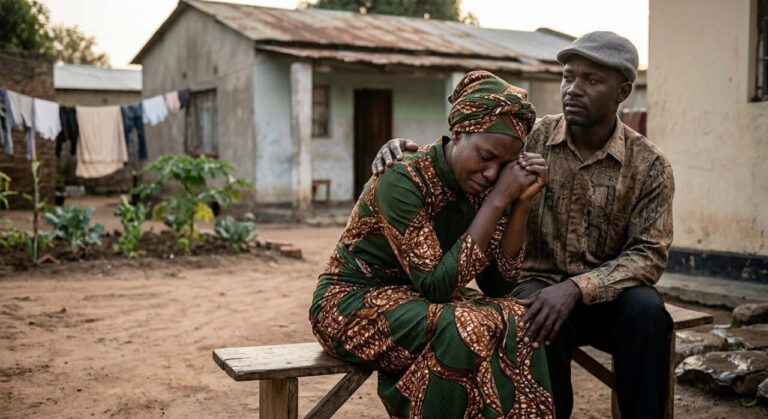
For many couples, having a child is a cherished dream. However, for some the journey to parenthood can bring years of uncertainty, emotional pain and social pressure. This might be due to infertility challenges.
In Malawi, having children is often closely tied to marriage and family expectations, but the experience can be particularly difficult to talk about, and people living with the condition suffers in silence.
For 28-year-old Sadaka Chitale (not real name) the journey to parenthood ended with the breakdown of his marriage after being diagnosed with a low sperm count.
Like many newly married couples, Chitale and his wife hoped to have a child within their first year of marriage. But as one year turned into two without a pregnancy, questions and pressure from family members began to grow. At the time, neither Chitale nor his wife had answers.
For Chitale the diagnosis was more than a medical condition because it eventually had consequences for his marriages.
“My ex-wife and I are from the matrilineal culture, where children are the responsibility of the mother’s side. When they learnt about my condition, my ex-wife’s family came to get her from our house and I devastated because, for us, everything was okay. I was told that she is the only child and that it would not be good for her to remain without having a child of her own.”
But, Chitale is not alone. Gladson Hope, 62, (not real name), says infertility has brought a deep sense of loneliness, particularly as he has grown older.
“I have had six wives but all of them left me because of the problem. People have been insulting me and laughing at me but I do not care anymore all I want is to get better and have a wife. The last one I had has left just few months ago. I have been searching for money to get treatment.”
Chitale’s and Hope’s stories reflect a wider and often overlooked reality: infertility is not only a medical challenge but can also carry significant social, financial and emotional consequences.
Stories like those of Chitale and Hope also challenge the perception that infertility is primarily a woman’s issue.
The World Health Organization defines infertility as a disease of the male or female reproductive system characterized by the failure to achieve pregnancy after 12 months or more of regular, unprotected sexual intercourse. It can result from factors affecting the man, the woman, both partners, or from unexplained causes.
Fertility specialist Dr Zaziwe Gunda says, “for men mostly it can be that they have chronic diseases like hypertension, diabetes, heart conditions but also some other hormonal factors that can interfere with their ability to be fertile and also to produce mature sperms that could fertilize an egg. For women mostly, they are ovulatory factors like the hormonal levels, broked tubes, fibroids, and other tumors in the uterus it can also be beyond the cervix”.
The social cost of infertility
A 2020 study by Bornstein and colleagues, Individual and Community-level Impact of Infertility-related Stigma in Malawi, found that people who experience, or are perceived to experience, infertility may face social ridicule, distancing, negative stereotypes, social exclusion and relationship instability, including divorce.
For Chitale, Hope and others, these are not simply findings in research papers. They are realities that can shape relationships, families and everyday lives.
But according to Dr Gunda, experiencing difficulties conceiving does not necessarily mean that a couple will never have children because in some cases, it may be a matter of subfertility.
For Manesi Sautso (not real name), the journey to motherhood took more than eight years, marked by emotional and social pressure.
“I felt sorry for myself and each and every month my monthly flow would come with tears because it meant I had failed. Now I understand because that pressure was coming because people expected me to have a baby. You go to visit a friend they are like are you pregnant now? When are having a baby? You put on a little weight, oh you are pregnant now, in reality you were not.
“It’s so hectic to the extent that when an opportunity came that my husband was offered a transfer to another location we agreed to move because we wanted to live in an area where nobody knew our background. But the good thing is my husband was not giving pressure,” she said.
The experiences of people living with infertility or subfertility raise an important question: when couples struggle to conceive, where do they turn to for help, and what kind of support is available to them?
Searching for answers
The Bornstein study found that people experiencing infertility may seek assistance from religious leaders, traditional healers and medical practitioners.
Sautso says her own challenge took her through different avenues in search of answers and treatment, starting from the hospital before eventually turning to traditional remedies while also trusting in God.
However, she says her journey also made her reflect on how people around those facing infertility respond to their struggles.
“The greatest problem we have is, we don’t support those people, we don’t comfort, we add on to the problem, we give them pressure. It is not a good situation and I wish people could support couple that are having problem in having children because the things we say add on to their pressure,”
Traditional medicine and infertility
For some people like Sautso, traditional medicine becomes part of the search for answers. Isabeilo Mashanda, a Blantyre-based herbalist, describes the support he offers to clients experiencing infertility.
“When they get here, we analyze them well then and diagnose. Some are inserted snails, some have mwana mphepo, some hemorrhoids some have fertility issues due to prolonged use of contraceptives, so we give him/her herbs to drink. We engage medical personnel if we come across a condition beyond our control”
Faith and infertility
But many couples facing infertility, combine traditional and medical treatment with religious support.
Sheikh Muslim Abbas Vinjenje, Secretary for the Ulama Council of Malawi, and says “The issue of infertility in Islam has been revealed on Quran chapter 42:50 where Allah Subhanahu wataala is affirming that infertility is there in Human beings and Allah Subhanahu wataala is the one who make people fertile or infertile”.
He says the council offers religious cancelling and guidance to people living with the condition knowing that it affects their emotional and spiritual wellbeing.
But sheikh Vinjenje has advised people against ridiculing and castigating people who are experiencing infertility and instead encouraged communities to treat the people with understanding and compassion.
A health system challenge
Infertility is not only a personal or social challenge. It is also increasingly being recognized as a health-system issue. In November 2025, the World Health Organization issued its first global guideline on infertility, calling for fertility care to be more affordable, accessible and respectful.
This raises important questions for Malawi; How accessible are fertility services to ordinary Malawians? And to what extent does Malawi’s health system provide the medical, psychological and social support needed by couples experiencing infertility?
Fertility specialist Dr Gunda says also weighs in on the support available to couples experiencing infertility, including the services available through the public health system.
Beyond having a child
For people like Chitale, Hope and Sautso, the struggle to conceive goes beyond the hope of having a child.
It can affect relationships, emotional wellbeing, financial stability and how individuals are treated by their families and communities.
And while couples may seek answers through hospitals, traditional medicine or religious support, what matters is that they have access to accurate information, appropriate care and support without stigma.
Because infertility is not only about becoming a parent. It is also about being understood, supported and treated with dignity.
By Aminah Harrid | Radio Islam Malawi
About The Author