The reserve bank of Malawi has said the country’s inflation rate continued to decline in June this year, driven by lower food and fuel prices.
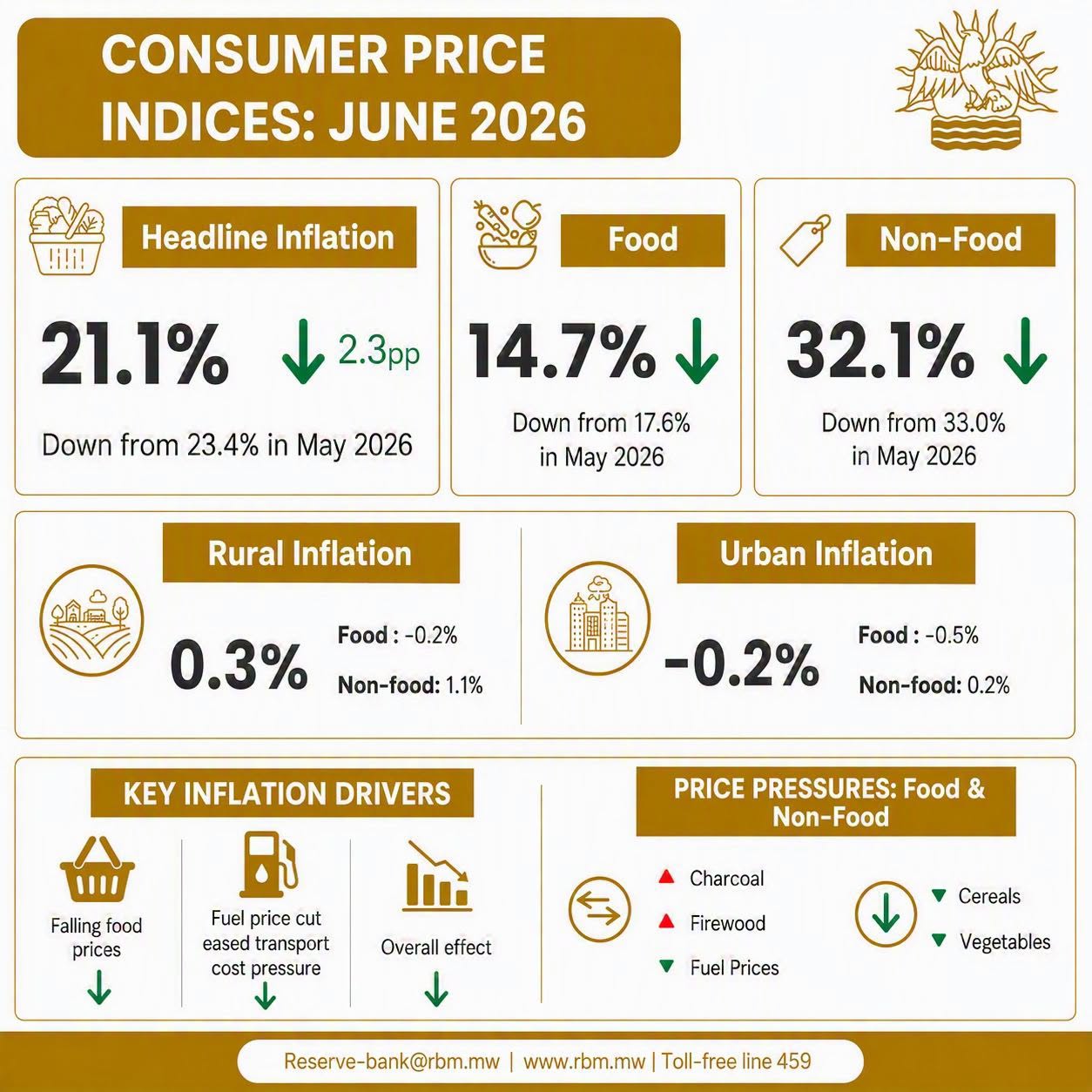
According to the latest Consumer Price Indices released on July 21, the headline inflation fell to 21.1 percent in June, down from 23.4 percent recorded in May.
The report also indicates that food inflation dropped from 17.6 percent to 14.7 percent during the same period.
According to the figures, the decline was mainly due to lower prices of cereals and vegetables, as well as reduced fuel costs, which helped ease overall price pressures.
Although inflation remains high, the continued slowdown suggests that the cost of living is beginning to stabilize, offering some relief to households and businesses that have been struggling with rising prices.
Authorities say the latest figures point to easing inflationary pressures, with hopes that the downward trend will continue in the coming months.
On July 15th, the National Statistical office (NSO) report, indicated that in urban areas, monthly inflation rate reached -0.2 percent, comprising a -0.5 percent decline in food prices and a 0.2 percent rise in non-food prices.
However, the report said rural areas experienced a higher inflation rate of 0.3 percent, mainly due to a 1.1 percent increase in non-food inflation and a moderate decline of food prices by 0.2 percent.
In June this year, the National Statistical Office said poverty in Malawi declined from 50.7 percent to 47.3 percent, according to findings from the Sixth Integrated Household Survey (IHS6).
Speaking during the launch of the Sixth Integrated Household survey report in Lilongwe, NSO Commissioner Shelton Kanyanda said the report also revealed that only 18.8 percent of Malawians aged 18 years and above posses bank accounts.
Kanyanda said the survey further indicated that the literacy rate improved from 75 percent to 79 percent.
He however noted that poverty remained severe particularly in districts like Phalombe, largely due to the frequent occurrence of natural disasters that continue to affect livelihoods and economic activities.
About The Author