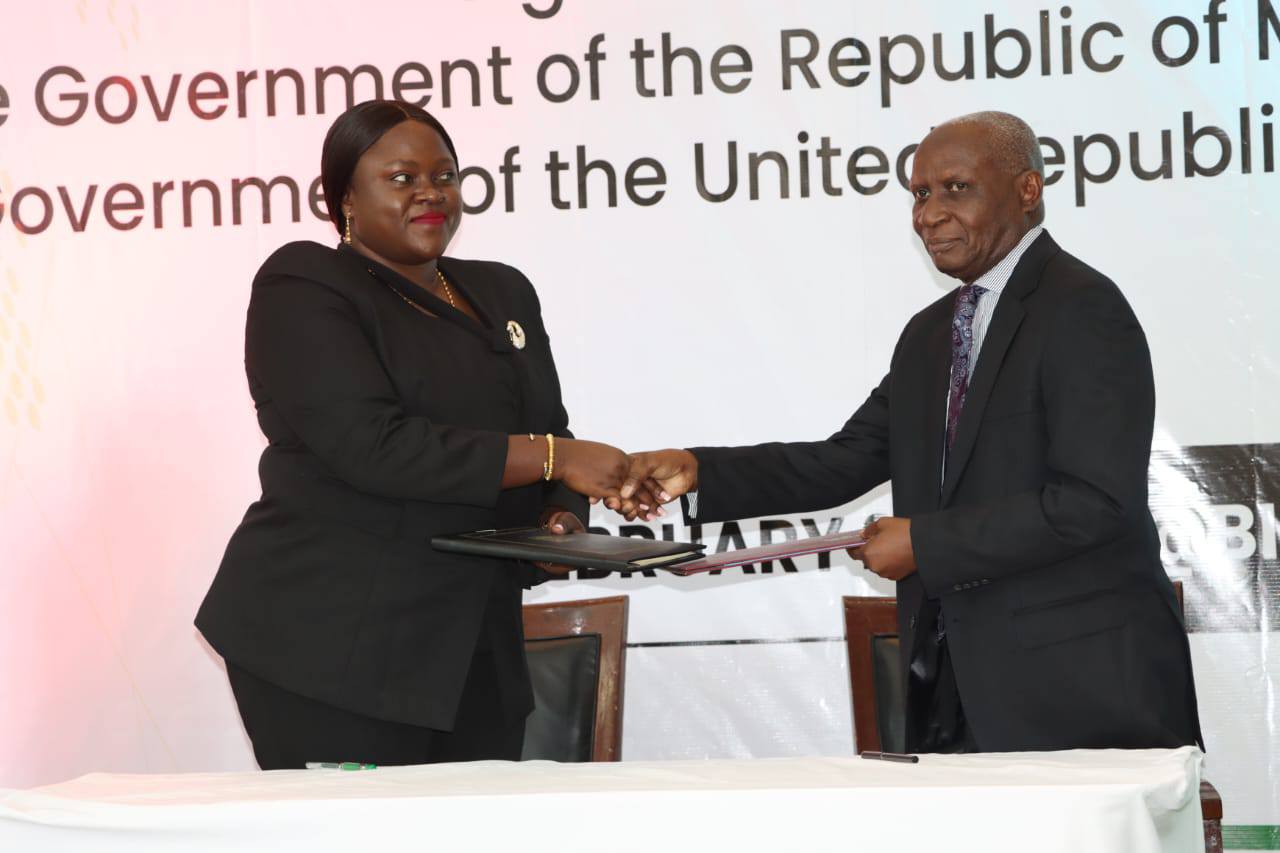
Government says the Simplified Trade Regime STR agreement between Malawi and Tanzania will strengthen cross-border trade and deepen the regional integration.
Speaking at Bingu International Convention Centre (BICC) in Lilongwe during the signing ceremony, Minister of Industrialization, business, trade and tourism Simon Itaye, says the STR agreement which is practical and people-centred is a milestone towards the growth of economic cooperation between the two countries.
Itaye says among other benefits the agreement, will reduce administrative barriers, simplify customs procedure and promote transparency in the movement of goods.
“This agreement will benefit women and youth in particular by streamlining documentation and improving coordination among border agencies, the two aim of this agreement is governments to make trade more accessible and efficient for small and medium-sized enterprises”, He said.
He says the initiative aligns well with national development strategy, regional integration efforts and the aspiration of the African Continental Free Trade Area (AFCFTA).
The Minister therefore commended technical teams from both countries for successfully negotiating the agreement, acknowledged support from the Government of the United Kingdom (UK) through Alliance for a Green Revolution in Africa (AGRA).
In her remarks, Tanzanian minister of industry and trade Judith Salvio Kapinga says her country has lost 37 million US dollars in trade with Malawi between 2021 and 2024 as most Malawians resorted to using unchartered routes.
“Tanzania’s exports to Malawi grew from 64 million US dollars to 77.7 million US dollars, over the same period, however, imports from Malawi to our country, declined from US$22.5 million to US$20.5 million”. She said.
Kapinga says the majority of cross-border traders have been facing several challenges in business therefore expressing hope that the deal will ease the challenges and facilitate trade.
She therefore said the agreement will improve safety and dignity for women and youth traders, strengthen food security and livelihoods in border communities.
About The Author